


The Calling of a Parent Echos Calling of Amida
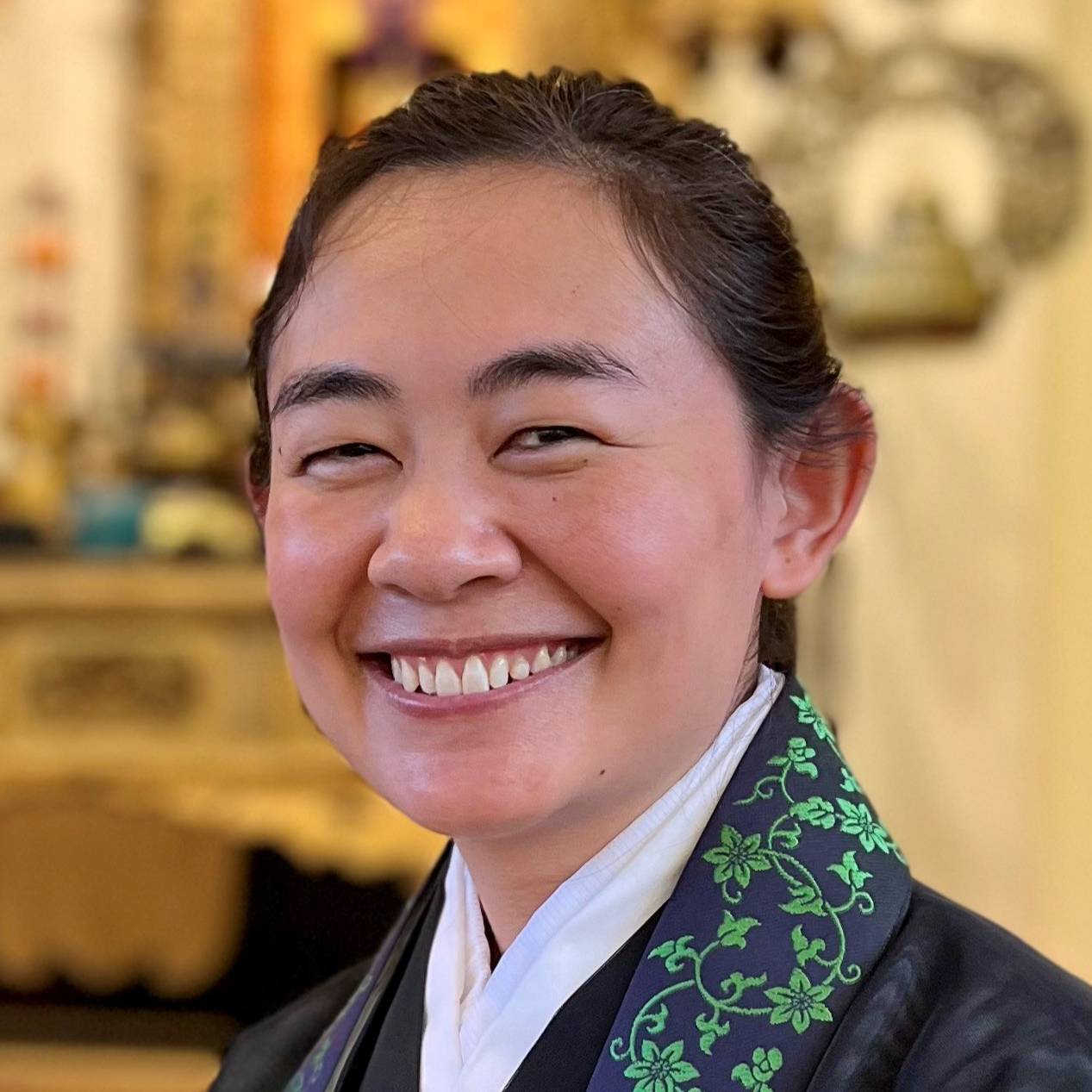
Over the past eight or nine months, I have been continuously thinking to myself: Will I be a good parent?
My husband and I are expecting our first child in early March, and as a first-time parent, I am constantly worrying about the baby and what it means to be a parent.
In a way, we are already parents. Since my husband and I moved to the Northwest for his assignment at the Tacoma Buddhist Temple in 2020, we have been pet parents.
Our cat, whom we adopted from the local humane society, has taught us patience and prepared us for the possibility that something might go wrong. But, as everyone says, cats have very selective hearing and there are times when he won’t listen to us. Also, cats do not fully understand human language, but it is interesting that he sometimes follows our “Come here” when we want to lead him somewhere, usually with treats.
But parenting a human being is different. Not only are there stricter laws made by society for human children, but going to the prenatal appointments every month and feeling the baby move makes me feel the pressure of being a parent, especially being a good and responsible parent. Before, during, and after our appointments, I feel that I am already a bad parent if the doctor finds something wrong or concerning. Having to do the labs, even though it is mainly routine, makes me nervous for the results to make sure that I, and hopefully my child, are within the “normal” range and healthy.
Even though the baby isn't born yet, it is already our job (my husband and I) to make sure the baby is being fed well, growing as expected, and that we have everything we need when the baby is born. In this way, we are already parents, even though our child has not yet been born.
According to doctors, while in the womb, a child begins to hear the voices of the mother and those around her. Which is why it is important for the mother to talk and sing to the child and for the father or spouse to do the same, so that when the baby is born, they know who the parents are. This means we hear our parents' calling before we are born.
This can be true when we speak of the calling of Amida Buddha. Amida Buddha has been calling to each of us even before we are born into this world. They call to us through “Namo Amida Butsu,” urging us to trust in them.
This is even true for those who did not encounter Jodo Shinshu or Buddhism until later in life. Amida Buddha calls to everyone, whether we know it or not. It is our choice, once we are born into this world, whether we choose to listen to the calling.
I am pretty sure each of us has ignored our parents at some time or another. They probably are not the most joyful or memorable parts of our lives, but it is natural that there comes a time when we choose not to listen to our parents, or they realize that their voices no longer reach our ears. There have been a number of times when my parents tried to call me, and I couldn't hear them. There have been multiple times when my parents have called me, and I chose to ignore them.
Listening to the calling of Amida Buddha is the same in a way. The voice of Amida Buddha reaches us always, but because of our “selective hearing,” we choose not to hear it until we become aware of the reason for their calling. The reason for their calling is to help each and every one of us indiscriminately for our salvation from this world of suffering.
But even though we cannot hear or choose not to hear their calling, Amida Buddha does not abandon us. In Shinran Shonin's writings, Amida Buddha’s wisdom and compassion are described as those of a parent for their child. In Japanese, Amida Buddha is often called “Oyasama” or parent.
Amida Buddha can be understood as a parent who does not get mad at us when we do not listen, and who does not forget us when we choose not to listen. This is the infinite wisdom and compassion of the Buddha of Immeasurable Light and Infinite Life that grasps us and never abandons us human beings.
When raising children, I am sure there will be times when my husband and I will get mad at our child for not listening and end up disciplining them. Amida Buddha instead takes an approach of not disciplining the child (us) and calmly tells the child they will always be there to support them when the child is ready to listen.
Though I hope to be a parent like Amida Buddha, I know that is impossible. Not only because I am not a Buddha or Bodhisattva, but because I do not have their infinite patience. I know there will be many times when our child doesn't listen to us, and we will get frustrated with their choice. Even though I cannot be an all-compassionate, all-wise Buddha like Amida Buddha, I will always try to be a kind and patient parent who waits for their child to listen and loves and embraces them as Amida Buddha does.


Comments